In modern manufacturing, cleanliness is more than just an aesthetic requirement. Oil, grease, machining fluids, flux residues, and other contaminants can interfere with coating adhesion, soldering, bonding, assembly, and overall product performance. As manufacturing processes become increasingly precise, selecting the right industrial cleaning technology is essential to maintaining consistent quality.
One established solution is vapor degreasing, a solvent-based cleaning process used to remove contaminants from metal components and other compatible materials. By combining solvent immersion, vapor condensation, and, in many systems, solvent recovery, vapor degreasing can deliver efficient and repeatable cleaning for applications that demand consistent surface cleanliness.
But how does this technology work, what are its advantages, and when should manufacturers consider using it?
What Is Vapor Degreasing?
Vapor degreasing is an industrial cleaning process that uses a heated solvent to remove oils, grease, waxes, flux residues, and other compatible contaminants from components.
Unlike aqueous cleaning methods that rely on water-based cleaning formulations, vapor degreasing uses solvent chemistry and controlled temperature conditions to facilitate contaminant removal. Depending on the equipment configuration, the process may combine liquid immersion, vapor condensation, solvent rinsing, and drying within a single machine.
A conventional vapor degreasing system contains a heated reservoir, known as the boil sump, where the cleaning solvent is heated to its boiling point. The resulting vapor rises into the machine’s vapor zone, where cooling coils condense it back into liquid form.
When cooler components enter the vapor zone, solvent vapor condenses on their surfaces. The resulting liquid solvent wets the components, dissolves compatible contaminants, and drains away, carrying dissolved soils with it.
The appropriate cleaning process depends on the type of contamination, substrate material, required cleanliness level, and production requirements. Vapor degreasing is particularly relevant when manufacturers need a controlled solvent-based process to prepare components for subsequent manufacturing operations.
The Technology Behind a Vapor Degreaser
To understand how vapor degreasing works, it is helpful to examine the main components of a conventional system.
Although equipment designs differ between manufacturers, many vapor degreasers incorporate a boil sump, a rinse sump, cooling coils, a vapor zone, and a solvent recovery arrangement.
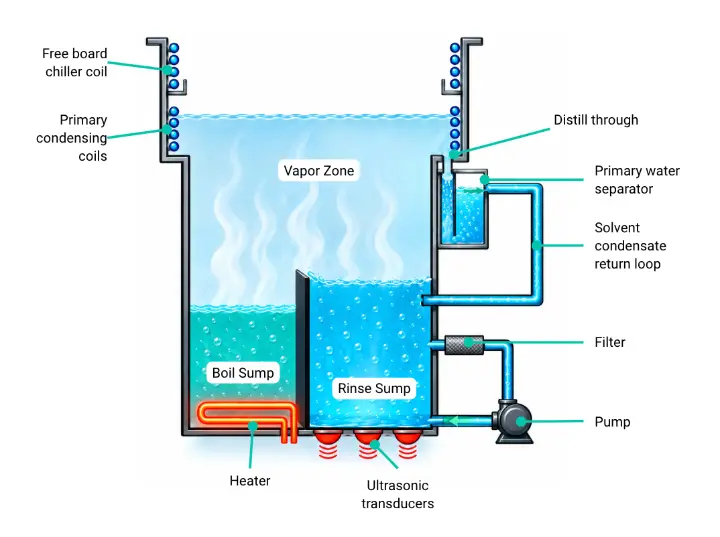
Image 1. Technology Behind a Vapor Degreaser
Boil Sump: Where the Cleaning Cycle Begins
The boil sump is the reservoir in which the cleaning solvent is heated.
Heating elements raise the solvent temperature to its specified boiling point. As the solvent boils, vapor is generated and rises above the liquid surface.
In systems designed for immersion cleaning, the boil sump also serves as the primary cleaning bath. Components submerged in the liquid solvent come into direct contact with the cleaning fluid, allowing compatible oils, grease, and other contaminants to dissolve into the liquid.
As the process continues, dissolved contaminants accumulate in the boil sump. Solvent condition, operating procedures, and maintenance practices therefore play important roles in maintaining cleaning performance.
Rinse Sump: Removing Remaining Contamination
Many conventional vapor degreasers incorporate a separate rinse sump containing cleaner solvent.
After the primary cleaning stage, components are transferred into the rinse sump to remove residual contamination carried over from the boil sump.
In a common system arrangement, condensed solvent collected from the cooling coils is directed into the rinse sump. Excess liquid may then overflow into the boil sump, helping maintain a supply of cleaner solvent for rinsing.
This arrangement separates the primary cleaning stage from the final rinsing stage, reducing the likelihood that contaminants from the primary bath will remain on the component.
However, not every vapor degreaser uses two sumps. The appropriate configuration depends on the equipment design, solvent chemistry, and cleaning application.
Cooling Coils: Controlling the Vapor Zone
Cooling coils are positioned above the solvent sumps to condense rising solvent vapor.
When the vapor contacts the cooler coil surfaces, it releases heat and returns to liquid form. The resulting condensate is collected and directed back into the machine’s solvent recovery system.
The cooling coils also help establish a controlled vapor boundary within the equipment, limiting unnecessary solvent vapor escape during normal operation.
Effective vapor containment depends on equipment design, operating conditions, ventilation, solvent properties, and proper maintenance.
Vapor Zone: The Final Cleaning and Drying Stage
The vapor zone is the area above the liquid solvent where vapor condenses on relatively cool components.
When a component enters this zone, its initially cooler surface causes solvent vapor to condense. The resulting liquid film flows across the surface, dissolving compatible contaminants and carrying them away as the liquid drains.
As the component warms toward the vapor temperature, the rate of condensation decreases. Eventually, condensation stops.
The component can then be withdrawn according to the equipment’s operating procedure. Remaining solvent drains from the surface and evaporates under suitable conditions.
This process can leave components clean and relatively dry, potentially eliminating separate water-rinsing and drying operations in suitable applications. The final result depends on solvent properties, equipment configuration, component geometry, and the required cleanliness criteria.
Solvent Recovery and Water Separation
Many conventional vapor degreasers are designed to recover and reuse condensed solvent.
The cooling system condenses solvent vapor, and the resulting liquid is collected for reuse within the machine. This arrangement supports solvent recovery and helps maintain a controlled cleaning process.
Depending on the solvent and equipment design, a water separator may also be incorporated to separate water that enters the system through moisture or other sources.
Water management can be important because accumulated moisture may affect cleaning performance or the condition of certain solvent formulations.
Solvent recovery does not eliminate all solvent losses. Drag-out, leakage, equipment opening, maintenance, and other operating conditions may contribute to solvent consumption. Appropriate monitoring and maintenance are therefore essential.
Why Does Vapor Degreasing Work?
The effectiveness of vapor degreasing comes from the interaction between solvent chemistry, heat transfer, surface wetting, and controlled liquid drainage.
Understanding these factors helps manufacturers select the appropriate process for their components.
1. Solvent Chemistry and Contaminant Removal
Cleaning solvents differ in their ability to dissolve particular contaminants.
Some are effective at removing nonpolar oils and greases, while others are formulated to address more specific residues or combinations of contamination. A solvent that performs well against machining oil may not provide equivalent results against every type of flux, wax, adhesive residue, or particulate contamination.
Solvent selection should therefore begin with identifying the contaminants that need to be removed. The process must also account for the materials being cleaned. A solvent that dissolves the target contaminant may affect certain plastics, elastomers, coatings, adhesives, or other sensitive materials.
2. Condensation and Surface Flushing
When solvent vapor condenses on a cooler component, it creates a liquid film that flows across the surface. This movement helps carry dissolved contaminants away from the component. As the liquid drains, it returns to the cleaning system rather than remaining on the surface. The combination of condensation, solvent dissolution, and drainage is central to the operation of a conventional vapor degreaser.
3. Surface Tension and Wettability
Surface tension influences how a liquid interacts with a surface and whether it can spread across or penetrate certain features. Cleaning solvents with suitable wetting characteristics may reach narrow spaces and intricate geometries more effectively than fluids that do not wet the surface as readily. This can be beneficial when cleaning components with threads, small gaps, or complex machined features.
Nevertheless, low surface tension alone does not guarantee successful cleaning. The solvent must also dissolve the target contamination, remain compatible with the substrate, and be able to enter and drain from the relevant features.
4. Temperature and Process Control
Temperature influences solvent vapor generation, condensation, evaporation, and cleaning-cycle behavior. Each cleaning fluid has a defined boiling point or boiling range under specified conditions. The equipment must operate within the limits recommended for the selected fluid. Temperature should not be considered independently of other process variables. Cleaning time, immersion conditions, solvent condition, component geometry, and the required cleanliness level also affect the final result. Successful vapor degreasing therefore requires the cleaning chemistry and equipment to be selected and controlled together.
What Are the Key Benefits of Vapor Degreasing?
Vapor degreasing offers several potential advantages for manufacturers seeking consistent cleaning performance and efficient production processes.
1. Effective Cleaning of Complex Components
Manufactured components often contain small openings, blind holes, narrow gaps, threads, and intricate geometries that can be difficult to clean consistently.
Suitable vapor degreasing solvents can wet compatible surfaces and penetrate narrow spaces, helping remove solvent-soluble contaminants from areas that may be challenging to reach using conventional wiping methods. For components with complex geometries, cleaning effectiveness depends on solvent selection, component orientation, immersion conditions, and the equipment’s capabilities.
2. Consistent and Repeatable Cleaning
Industrial cleaning requires more than removing visible contamination. Manufacturers also need a process that can deliver consistent results across production batches.
Vapor degreasing can provide a controlled cleaning environment through defined process parameters, including solvent temperature, cleaning duration, immersion conditions, and rinse stages. When properly developed and validated, these parameters help manufacturers establish repeatable cleaning procedures and reduce variability between batches. Repeatability still depends on maintaining equipment condition, monitoring solvent quality, controlling loading practices, and verifying cleaning performance.
3. Integrated Cleaning, Rinsing, and Drying
Many vapor degreasing systems combine multiple cleaning stages within one machine. Depending on the configuration, components can undergo immersion cleaning, rinsing with cleaner solvent, and final vapor rinsing without requiring separate equipment for every stage. This integration can simplify material handling and reduce the need for additional drying operations. For manufacturers operating high-throughput production lines, these advantages may contribute to improved workflow efficiency.
4. Solvent Recovery and Reuse
A key feature of conventional vapor degreasing equipment is its ability to condense solvent vapor and return the recovered liquid to the cleaning system. This design supports solvent recovery and reuse, potentially reducing solvent consumption compared with processes that do not incorporate recovery.
However, solvent losses can still occur through drag-out, leakage, equipment opening, maintenance, and other operating conditions. Contaminants and accumulated residues must also be managed appropriately. Actual solvent consumption and operating costs should therefore be evaluated under the intended production conditions.
5. Potentially Reduced Dependence on Water-Based Cleaning
Water-based cleaning can be effective for many applications, but it may require additional rinsing, drying, and wastewater management depending on the chemistry and process requirements. Vapor degreasing offers an alternative for applications where compatible solvent chemistry can meet the required cleanliness specifications.
The choice between solvent-based and aqueous cleaning should consider contamination type, substrate compatibility, cleaning acceptance criteria, production requirements, worker safety, and environmental obligations. Neither technology is universally superior. The appropriate choice depends on the application.
Choosing the Right Vapor Degreasing Machine and Solvent
Selecting a vapor degreasing system involves more than choosing a machine with a suitable tank size. The equipment and cleaning solvent must work together to meet the requirements of the application. Several factors should be considered during the selection process.
1. Type of Contamination
Identify the substances that must be removed, such as machining oils, lubricants, grease, wax, or flux residues. Different contaminants have different chemical properties, so solvent selection should be based on the required cleaning performance.
2. Component Material and Geometry
Consider the component’s substrate, coatings, seals, adhesives, and other materials that may contact the solvent. Part dimensions, blind holes, internal channels, and component arrangement can also influence cleaning performance.
3. Production Volume and Throughput
Batch size, cycle time, loading configuration, and production frequency help determine the required equipment capacity. Manufacturers with high production volumes may have different requirements from those processing smaller batches of specialized components.
4. Required Cleaning Performance
Define the required level of cleanliness and how it will be measured. Depending on the application, acceptance criteria may include visual cleanliness, residue levels, particle limits, or other application-specific tests.
5. Equipment Configuration
Vapor degreasing systems are available in different configurations, including systems with multiple sumps, automated material handling, and optional cleaning enhancements such as ultrasonic agitation. The appropriate configuration depends on the component, cleaning process, production requirements, and available operating space.
6. Safety and Environmental Requirements
Solvent selection must account for occupational exposure, flammability where relevant, material safety, emissions, waste management, and applicable chemical regulations. A vapor degreasing process should be designed and operated in accordance with the solvent manufacturer’s safety documentation, equipment requirements, and applicable local regulations.
These factors should be assessed together rather than independently. A suitable machine paired with an unsuitable solvent may not deliver the expected cleaning results, while an effective solvent may require a specific equipment configuration to perform as intended.
Vapor Degreasing Solutions from Maha
Choosing the right cleaning process starts with understanding the application.
At Maha, we offer customizable vapor degreasing equipment options from multiple suppliers, alongside cleaning solvents for vapor degreasing applications.
Our portfolio allows manufacturers to explore different equipment configurations and solvent options based on their specific cleaning requirements, rather than relying on a one-size-fits-all approach.
Whether you are looking to remove machining oils from precision components, improve cleaning consistency, or evaluate an alternative to an existing cleaning process, selecting the right equipment and solvent combination is an important first step.
Our team can help you explore available vapor degreasing equipment and cleaning solvent options based on your component materials, contamination challenges, production requirements, and process objectives.
Looking for a vapor degreasing solution for your application?
Contact Maha to discuss your cleaning requirements and explore customizable vapor degreasing equipment and compatible cleaning solvents for your manufacturing process.
References
- US Environmental Protection Agency (EPA). AP-42: Solvent Degreasing. Read the technical reference.
- US Food and Drug Administration (FDA). Evaluation of Production Cleaning Processes for Electronic Medical Devices — Part III: Methods. Read the technical reference.
- MicroCare. How Does Vapor Degreasing Work? Explore the technical resource.
- Indiana Department of Environmental Management (IDEM). Degreasing Operations. Explore the guidance.