The Ingredient Everyone Asked About
Natori Phytopeel answers a question more formulators are asking: how do you exfoliate as visibly as a physical scrub, without the scrub?
It's not a fringe idea. Enzyme exfoliation already has a proven track record in K-beauty, built into cult-favorite cleansing powders that pair papaya and green tea enzymes. Natori Phytopeel takes that same enzyme logic and moves it out of the once-a-week powder wash format and into a leave-on, liquid gel formulators can build a full product around.
The timing also lines up with regulation: Thailand and Indonesia have both banned plastic microbeads in rinse-off cosmetics — so a plant-based, enzyme-driven replacement for physical scrubs isn't just on-trend, it's increasingly the compliant option too.
The Problem With Scrubbing
Most physical exfoliants work by friction: microbeads, sugar, or crushed shells scrape the skin's surface until dead cells lift away. It works, but it is blunt — the same mechanical force that removes dead corneocytes can also micro-tear healthy skin, which is why so many scrubs are marketed as "gentle" right next to a warning not to overuse them.
The skin's own dead-cell layer, the stratum corneum, is held together by keratin, which binds dead skin cells into a protective barrier. When keratin traps too many dead cells, skin starts to look dull and uneven — but the fix does not have to be abrasive.
An Enzymatic Alternative
Download the 1-page flyer (PNG)
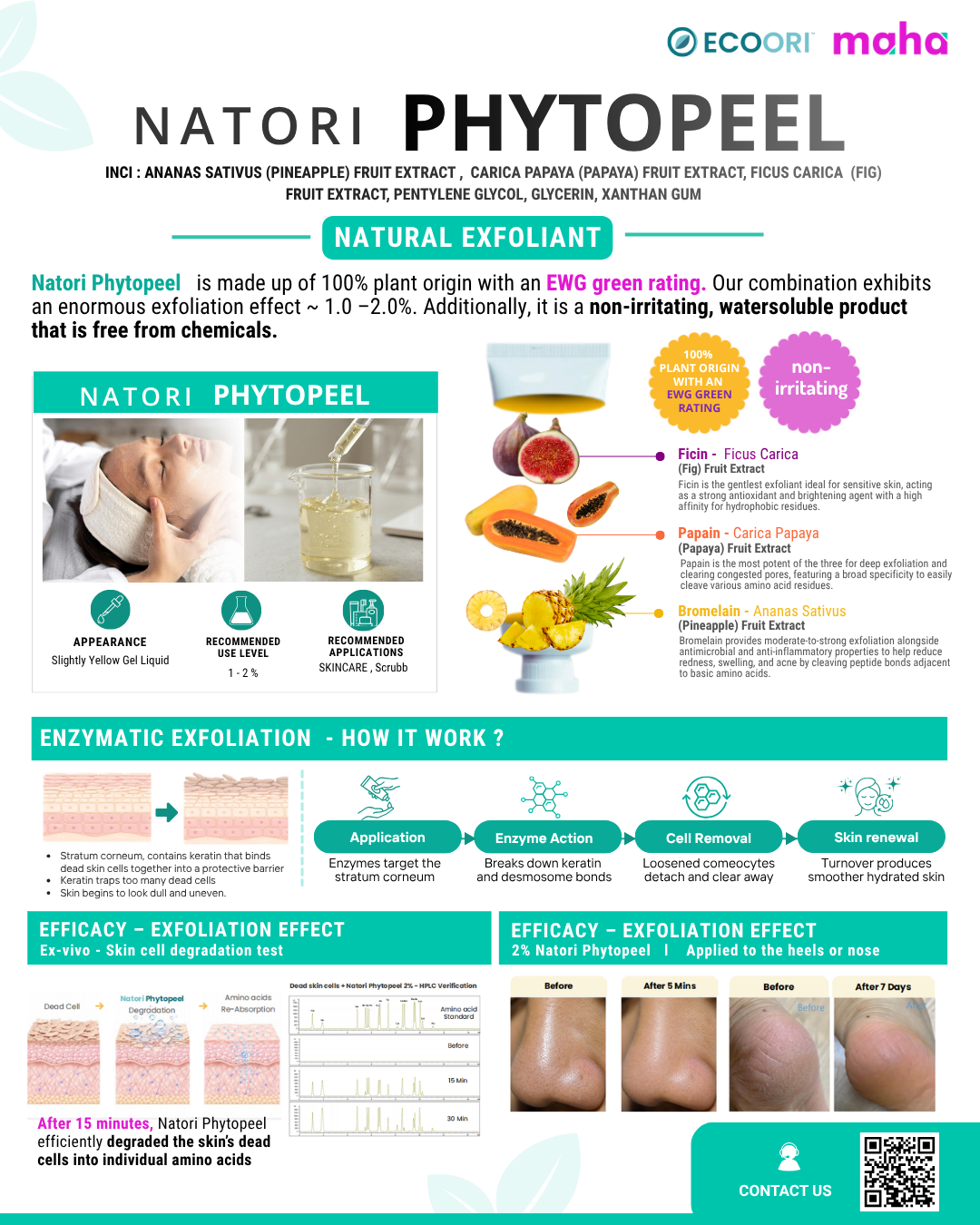
Natori Phytopeel takes a different approach: instead of scraping cells away, it digests the bonds holding them together. It is made from 100% plant-origin ingredients and carries an EWG Green rating, and the finished product is non-irritating, water-soluble, and free from chemical exfoliants — at a working concentration of just 1.0–2.0%.
The exfoliation comes from three fruit-derived enzymes, each with a distinct role:
- Ficin (Ficus Carica / fig fruit extract) — the gentlest of the three, suited to sensitive skin. It also acts as an antioxidant and brightening agent with a high affinity for hydrophobic residues.
- Papain (Carica Papaya / papaya fruit extract) — the most potent for deep exfoliation and clearing congested pores, with broad specificity that lets it cleave a wide range of amino acid residues.
- Bromelain (Ananas Sativus / pineapple fruit extract) — moderate-to-strong exfoliation alongside antimicrobial and anti-inflammatory properties that help reduce redness, swelling, and acne by cleaving peptide bonds next to basic amino acids.
How It Works
Enzymatic exfoliation follows four steps: enzymes target the stratum corneum on application; enzyme action breaks down keratin and desmosome bonds; loosened corneocytes detach and clear away during cell removal; and skin turnover produces smoother, more hydrated skin during renewal.
In an ex-vivo skin cell degradation test, Natori Phytopeel at 2% — applied to the heels and nose — efficiently degraded dead skin cells into individual amino acids within just 15 minutes.
Formulation Snapshot
- INCI: Ananas Sativus (Pineapple) Fruit Extract, Carica Papaya (Papaya) Fruit Extract, Ficus Carica (Fig) Fruit Extract, Pentylene Glycol, Glycerin, Xanthan Gum
- Recommended use level: 1–2%
- Appearance: Slightly yellow gel liquid
- Recommended applications: Skincare, scrub / exfoliating formats
For brands looking to move away from microplastic or abrasive scrubs without giving up a visible resurfacing effect, Natori Phytopeel offers a plant-based, enzyme-driven route to the same result.
Interested in samples or the full technical data sheet? Reach out to the MAHA team below.