In the world of cosmetics, preservatives play a crucial role in keeping products safe and effective. However, common preservatives like parabens often raise concerns about their long-term impact on skin health. This is where IPMP steps in—an innovative solution that ensures product safety without compromising quality. Curious about what makes IPMP a better choice? Read this article to learn more!
What is PARBFREE IPMP?
PARBFREE IPMP (Isopropyl Methylphenol) or o-cymen-5-ol is a preservative used in cosmetics and personal care products. The term PARBFREE refers to its paraben-free nature—meaning it doesn’t use parabens, which are widely used to prevent microbial growth and extend shelf life. Although effective, parabens may irritate sensitive skin and raise potential health concerns with long-term use.
Maha offers a safer alternative without sacrificing performance—IPMP. With strong antibacterial and antifungal properties, IPMP is ideal for beauty and skincare products, especially for consumers looking for preservative options that avoid potentially risky chemicals. On top of that, PARBFREE IPMP is more environmentally friendly, making it a great fit for natural and clean-beauty formulations.
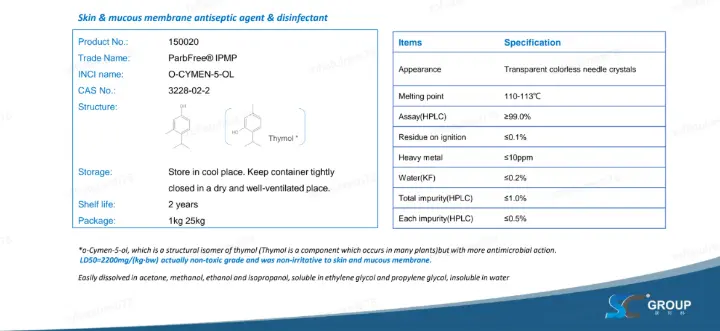
Image 1. Specification of IPMP
ParbFree® IPMP100 is a complex of o-Cymen-5-ol and Isopentyldiol, where Isopentyldiol acts as a solvent with moisturizing benefits. It works well in water-based systems and is easy to use in microemulsion formulations. Unlike Triclosan—which can release dioxins (carcinogenic when exposed to sunlight)—ParbFree® IPMP comes as a stable, odorless, tasteless white powder with neutral pH and excellent skin safety.
Applications of PARBFREE IPMP Across Industries
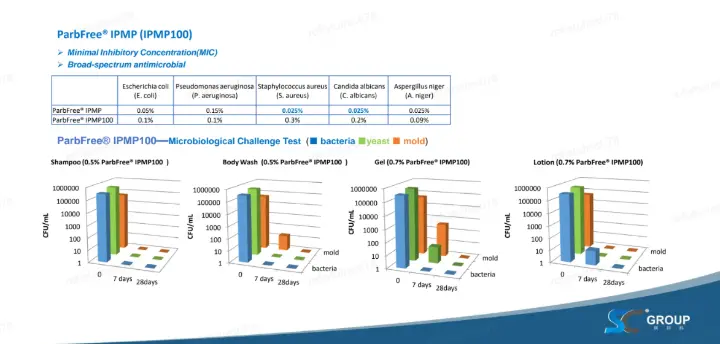
Image 2. IPMP Effectiveness Test
IPMP serves important functions in various industries, especially as a preservative in products that must remain safe, stable, and microbe-free.
Cosmetics Industry
IPMP is used as a preservative, fungicide, anti-dandruff agent, and anti-acne ingredient thanks to its strong antibacterial and antifungal activity.
Pharmaceutical Industry
In pharmaceuticals, IPMP helps preserve topical products like ointments, creams, and gels. It can also be used in biofilm treatments for periodontitis.
Other Industries
Beyond cosmetics and pharmaceuticals, IPMP is added to personal hygiene products, antibacterial solutions, deodorants, and even household cleaners.
IPMP vs. Triclosan: Which Is Better?
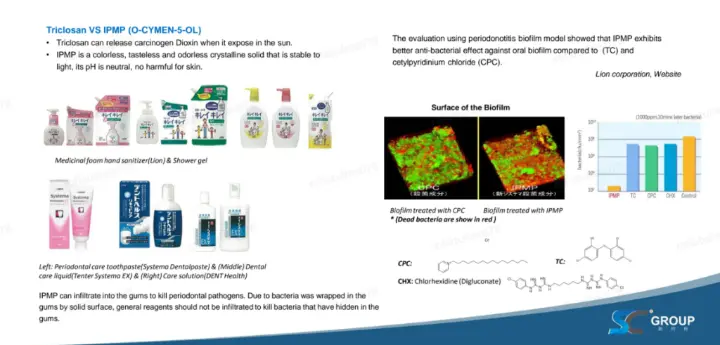
Image 3. Triclosan vs IPMP
While Triclosan is cost-effective, it carries serious health and environmental risks. IPMP, on the other hand, offers a safer, more natural, and eco-friendly antimicrobial option without compromising efficacy. With more consumers seeking clean, non-toxic beauty products, IPMP continues to grow in popularity across the personal care industry.
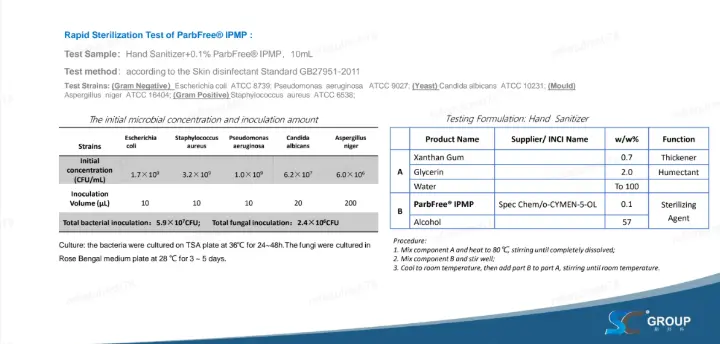
Image 4. Hand sanitizer formulation with IPMP
Recommended Usage Levels for PARBFREE IPMP
Usage guidelines vary by region:
- China: Listed in IECSC (Inventory of Existing Cosmetic Ingredients)
- EU:
- 76/768/EEC Annex VI/1,38: up to 0.1% (all cosmetics)
- 1223/2009 Annex V no. 38: up to 0.1% (all cosmetics)
- USA: CIR review: safe up to 0.5%
- Australia: Listed in AICS (CAS no. 3228-02-2)
- Japan (cosmetics):
- Leave-on and rinse-off (including mucous membranes): max 0.1%
- Rinse-off not applied to mucous membranes: no legislative upper
PARBFREE IPMP Supplier in Indonesia
Maha is the official distributor of PARBFREE IPMP in Indonesia—providing a safer preservative solution that maintains product stability without the risks associated with harsher chemicals. Reach us now to get full product information or request your FREE sample today!